


Piprocaine
Price range: €110.00 through €2,700.00
Technical Information:
Product Name: Piprocaine
Other Name(s): Piprocaine citrate, MPPB, 1-methyl-3-propyl-4-piperidinyl benzoate Citrate
IUPAC Name: 2-hydroxypropane-1,2,3-tricarboxylic acid;(1-methyl-3-propylpiperidin-4-yl) benzoate
CAS:
Molar Mass: 453.5 g/mol
Molecular Formula: C22H31NO9
InChi Code: InChI=1S/C16H23NO2.C6H8O7/c1-3-7-14-12-17(2)11-10-15(14)19-16(18)13-8-5-4-6-9-13;7-3(8)1-6(13,5(11)12)2-4(9)10/h4-6,8-9,14-15H,3,7,10-12H2,1-2H3;13H,1-2H2,(H,7,8)(H,9,10)(H,11,12)
InChIKey: YRTCVCVCOGDFHGJL-UHFFFAOYSA-N
Canonical SMILES: CCCC1CN(CCC1OC(=O)C2=CC=CC=CC=C2)C.C(C(C(=O)O)C(CC(=O)O)(C(=O)O)O
Formulation: A crystalline solid
Piprocaine 1-methyl-3-propyl-4-piperidinyl : Research Overview, Properties & Applications
What Is Piprocaine?
Piprocaine ( piprocaine citrate) is a synthetic analog of pipercaine, tropacocaine and cocaine, which has a related structure and similar effects. Piprocaine is a compound discussed in pharmaceutical and analytical research, often examined for its role as a local anesthetic agent. It belongs to a class of substances studied for their ability to temporarily influence nerve signal transmission, making it relevant in controlled laboratory settings focused on sensory response and nerve function.
| Chemical Name | 1-methyl-3-propyl-4-piperidinyl benzoate Citrate, MPPB, piprocaine |
| Purity | ≥98% |
| Packaging | In a UV resistant bag. |
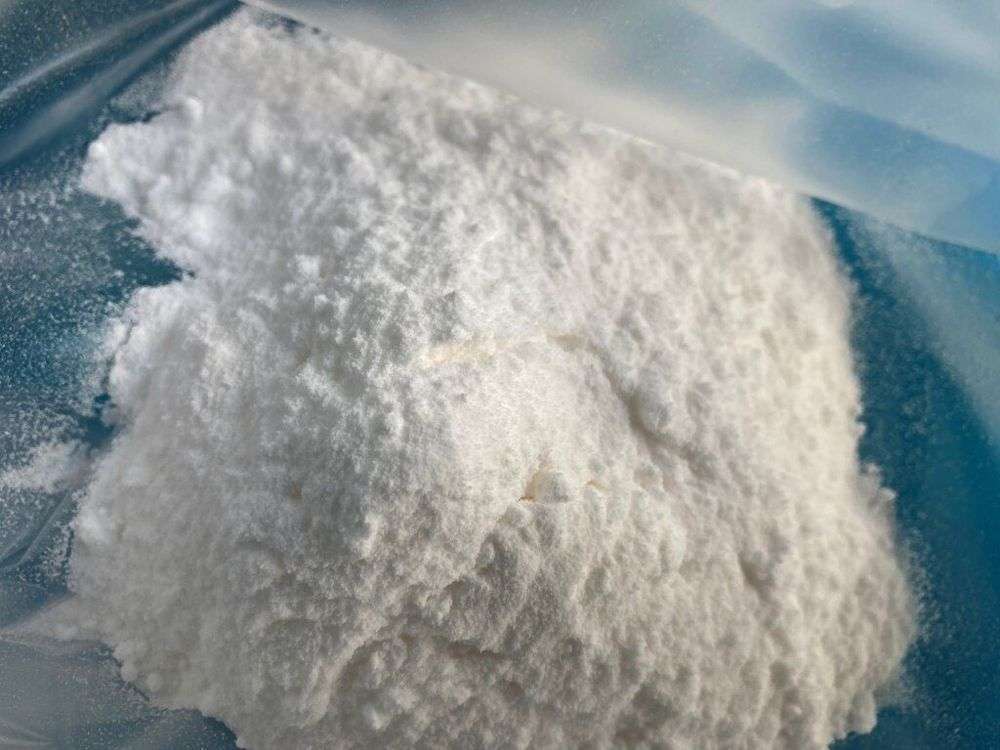
| Appearance | white powder |
| CAS# | N/A |
| Melting Point | N/A |
| Molecular Weight | 453.488g/mol |
| Molecular Formula | C22H31NO9 |
| Solubility | Soluble in water, DMSO, methanol, etc. |
| Storage | Store in a tightly sealed container in a cool, dry area. |
How It Works
Local Anesthetic Mechanism
Piprocaine is believed to:
- Block sodium channels in nerve cells
- Reduce the transmission of pain signals
- Temporarily alter sensory perception in targeted areas
This mechanism is widely studied to better understand nerve conduction and pain modulation.
Potential Research Applications
Why It’s Being Studied
In research environments, Piprocaine is explored for:
- Nerve signaling and conduction studies
- Pain response modeling
- Local anesthetic mechanism analysis
A researcher once noted, “Understanding how local anesthetics interact with nerves helps refine broader medical insights.”
Safety & Considerations
Key Points
- Intended for controlled research use
- Requires precise handling and dosage awareness
- Limited modern data compared to newer anesthetics
- Quality and purity are essential for reliable results
As with all compounds, controlled conditions are critical.
Frequently Asked Questions (FAQ)
Is Piprocaine approved for use?
It has historical use as a local anesthetic but is primarily referenced in research today.
Is it safe?
Safety depends on controlled and appropriate use within regulated environments.
What is it used for?
Primarily in nerve function and anesthetic research.
Can it be used outside research settings?
It should only be used in approved and regulated contexts.
| Quantity | 10 g, 25 g, 50 g, 100 g, 250 g, 500 g, 1kg |
|---|
Be the first to review “Piprocaine”
Related products




Reviews
There are no reviews yet.